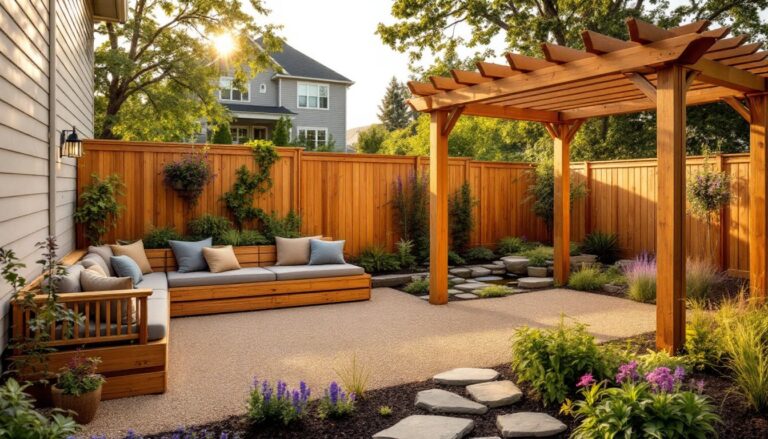
A sloped backyard doesn’t have to be a landscaping headache. With the right approach, that hillside can become the most interesting feature of an outdoor space, offering natural drainage, dramatic visual layers, and opportunities for creative design that flat yards simply can’t match. Homeowners often see slopes as obstacles, but experienced DIYers know they’re canvases for terracing, retaining walls, pathways, and tiered gardens. Whether dealing with a gentle grade or a steep drop, there are practical, buildable solutions that turn elevation changes into functional, beautiful spaces. This guide covers proven sloped backyard landscaping ideas that balance aesthetics, durability, and real-world installation challenges.
Table of Contents
ToggleKey Takeaways
- Sloped backyard ideas transform elevation changes into design assets by creating natural drainage, distinct zones, and layered visual interest that flat yards cannot match.
- Terracing with retaining walls (12–18 inches per level) stabilizes soil, prevents erosion, and turns steep slopes into practical multi-level planting beds and usable spaces.
- Decks and patios expand your living area on slopes: decks work best for steep grades with tall posts, while patios suit gentler slopes with proper excavation and retaining wall support.
- Stone pathways, steps (6–8 inch risers with 12-inch treads), and switchback routes improve safety and movement while adding design features that frame views and guide traffic naturally.
- Replace slope mowing with low-maintenance groundcovers, native perennials, mulch layers, and erosion control blankets to stabilize soil while reducing maintenance demands.
- Proper drainage—perforated drain pipes, gravel backfill, and directing water to daylight—is critical for any retaining wall to prevent failure and protect your foundation.
Why Sloped Backyards Are a Hidden Design Opportunity
Most flat yards require artificial features to create visual interest, raised beds, berms, or hardscaping. A slope already has that dimension built in. The challenge is managing erosion and making the space usable, but once those are addressed, the benefits stack up quickly.
Slopes offer natural drainage away from the house, reducing foundation moisture issues if graded correctly. They create distinct zones without fencing or hedges, upper areas for entertaining, mid-slopes for gardens, lower sections for play or storage. Vertical space becomes an asset, allowing layered plantings that showcase different textures and bloom times without crowding.
For small sloped backyard ideas, the elevation change can make a compact area feel larger by drawing the eye upward and adding depth. Even slightly sloped backyard ideas, those with just a few feet of grade change, benefit from intentional design that emphasizes the natural contour instead of fighting it.
The key is working with the grade, not against it. Trying to level a steep hillside is expensive, requires heavy equipment, and often creates drainage problems. Instead, smart design uses retaining walls, steps, and plantings to stabilize soil while enhancing the natural flow of the landscape.
Terraced Garden Beds for Multi-Level Planting
Terracing turns a steep slope into a series of flat, usable planting beds separated by low walls or timber borders. It’s one of the oldest landscaping techniques, used worldwide in hilly agricultural regions, and it works just as well for backyard gardens.
Each terrace should be deep enough to support root growth, at least 18 to 24 inches for most perennials and vegetables. The vertical drop between levels depends on the overall slope and desired aesthetic, but 12 to 18 inches is typical for residential projects. Shorter walls are easier to build without engineered footings, and they blend more naturally into the landscape.
Pressure-treated 6×6 timbers are a common material for small-scale terraces. Anchor them with rebar driven through pre-drilled holes and into the soil below. For longer runs, concrete retaining wall blocks interlock without mortar and handle more significant loads. Both options are DIY-friendly for walls under 3 feet. Anything taller may require a permit and engineering, especially in seismic zones or where soil stability is questionable.
Terraced beds solve erosion by slowing water runoff and allowing it to soak in at each level. They also make maintenance easier, watering, weeding, and harvesting happen at comfortable heights instead of on a precarious slope. For down sloped backyard ideas, terracing maximizes planting area without sacrificing the natural contour that makes the space interesting.
Retaining Walls That Combine Function and Beauty
Retaining walls do more than hold back soil, they define spaces, create level pads for patios or sheds, and add architectural interest to sloped backyard landscaping. The right wall material depends on the height, load, and aesthetic.
Segmental concrete blocks are the workhorse choice. They’re affordable, widely available, and rated for specific heights based on backfill and drainage. Most DIY-friendly systems handle walls up to 3 to 4 feet without special engineering. They stack dry (no mortar), relying on interlocking lips and setback to resist soil pressure. Always install landscape fabric and crushed gravel backfill to prevent hydrostatic pressure from building up behind the wall.
Natural stone (fieldstone, limestone, or granite) offers a more organic look but requires more skill to fit and stack. Dry-stacked stone walls work well for shorter applications, under 2 feet, and pair beautifully with native plantings. For taller stone walls, mortar and a poured footing are necessary, which often means hiring a mason.
Poured concrete walls are the heavy-duty option for slopes with serious grade changes or unstable soil. They require formwork, rebar, and concrete experience, plus a building permit in most jurisdictions. Unless the project is structural in scope, they’re overkill for typical backyard slope ideas.
Drainage is critical for any retaining wall. Install perforated drain pipe at the base of the wall, surrounded by gravel, and run it to daylight or a dry well. Without proper drainage, even the best-built wall will eventually fail.
Create Usable Spaces with Decking and Patios
A sloped yard often lacks flat ground for furniture, grills, or play areas. Building a deck or patio on the slope creates that usable footprint while taking advantage of views and natural ventilation.
Decks are ideal for steep slopes where leveling the ground isn’t practical. Pressure-treated posts set in concrete footings support a level frame, with the deck surface floating above the grade. For slopes, this often means taller posts on the downhill side, sometimes 6 feet or more. Always check local codes for frost line depth and lateral bracing requirements. Taller decks need diagonal bracing or blocking to prevent sway.
Use joist hangers and galvanized fasteners throughout. If the deck is more than 30 inches above grade, most codes require a railing with balusters spaced no more than 4 inches apart. Composite decking resists rot and splinters better than wood, but it costs more and can get hot in direct sun. Pressure-treated or naturally rot-resistant woods like cedar or redwood are still solid choices for budget-conscious builders.
Patios work better on gentle grades. Excavate and level the pad, then build a retaining wall on the downhill edge to hold the patio surface. Lay a 4-inch crushed stone base, compact it thoroughly, then top with 2 inches of leveling sand for pavers or flagstone. For poured concrete, a gravel base and rebar reinforcement prevent cracking as the ground shifts.
Both options expand living space and reduce mowing on awkward slopes. Decks handle larger elevation changes with less excavation, while patios feel more grounded and permanent.
Natural Stone Pathways and Steps
Navigating a slope safely requires well-placed steps or pathways. Poorly planned routes lead to erosion, mud, and tripping hazards. Done right, they become design features that guide movement and frame views.
Flagstone or limestone steps set into the slope are durable and blend naturally. Dig into the hillside to create a level tread for each step, compact the soil, then lay a 2- to 4-inch stone slab. Each step should have a rise of 6 to 8 inches and a tread depth of at least 12 inches for comfortable, safe footing. Shorter rises are easier to climb but require more steps.
For longer runs, railroad ties or thick timbers create rustic steps that hold back soil and define the path. Anchor them with rebar to prevent shifting. Fill behind each tie with gravel for drainage and top with decomposed granite or mulch for a softer walking surface.
Switchback paths reduce the effective grade on steep slopes. Instead of climbing straight up, the path zigzags across the hillside, making the climb easier and giving a chance to add landings or rest stops. Line the edges with low plants or stones to prevent erosion and mark the route clearly.
Adding landscape lighting along steps and pathways improves safety and extends usability into evening hours. Low-voltage LED lights are DIY-friendly and don’t require an electrician in most areas. Just bury the cable a few inches deep and stake the fixtures where needed.
Low-Maintenance Landscaping Solutions for Slopes
Mowing or maintaining turf on a slope is frustrating and sometimes dangerous. Smart landscaping ideas for sloped backyard projects replace high-maintenance grass with plantings and groundcovers that stabilize soil and look good year-round.
Groundcovers spread horizontally, rooting as they go and holding soil in place. Creeping juniper, vinca, and creeping thyme are tough, drought-tolerant options that tolerate poor soil and full sun. For shade, try pachysandra or ajuga. Plant them on 12- to 18-inch centers and mulch in between until they fill in.
Native grasses and perennials with deep root systems prevent erosion better than shallow-rooted annuals. Switchgrass, fountain grass, and black-eyed Susans thrive on slopes with minimal water once established. Choose plants suited to the site’s sun exposure and soil type, forcing the wrong species into a slope just creates more work.
Mulch is essential on bare slopes. A 3- to 4-inch layer of shredded hardwood or pine bark slows runoff, moderates soil temperature, and suppresses weeds. For steeper grades, consider erosion control blankets (jute or coir mesh) staked down until plants establish. They biodegrade over time and give young roots a chance to anchor before heavy rains hit.
Rock gardens are another low-maintenance option. Use a mix of boulders, gravel, and drought-tolerant plants like sedum, hens-and-chicks, or lavender. The rocks add thermal mass and visual interest while reducing the area that needs watering or weeding. Just be sure to install landscape fabric under the gravel to suppress weeds long-term.
Conclusion
A sloped backyard isn’t a liability, it’s a chance to build something more interesting than a flat lawn. Whether installing tiered garden beds, retaining walls, or stone steps, the goal is the same: stabilize the soil, create usable space, and enhance the natural topography instead of erasing it. Front yard hill landscaping ideas apply the same principles, work with the grade, prioritize drainage, and choose materials that last. With the right plan and a willingness to dig in, that hillside becomes the best part of the property.