Front yard landscaping shouldn’t feel like a part-time job. Between mowing, weeding, watering, and edging, traditional lawns and flowerbeds can consume 10-plus hours each month. For homeowners juggling work, family, and everything else, that’s time better spent elsewhere. The good news: a well-designed low maintenance landscape doesn’t sacrifice curb appeal, it amplifies it while cutting labor and costs. By choosing plants that thrive without fussing, swapping turf for strategic hardscaping, and controlling weeds from the start, anyone can create a front yard that looks sharp year-round with minimal effort.
Table of Contents
ToggleKey Takeaways
- Low maintenance landscaping ideas for your front yard can save 10+ hours of monthly upkeep while boosting curb appeal through native plants, hardscaping, and strategic design.
- Native perennials and drought-tolerant plants like coneflower, sedum, and ornamental grasses thrive without constant watering or replanting, paying for themselves within three to five years.
- Replacing lawn with hardscaping solutions—gravel pathways, flagstone, or permeable pavers—eliminates mowing and fertilizing while adding structure and visual interest to your yard.
- A 3-inch layer of mulch combined with ground covers like creeping thyme or sedum suppresses weeds naturally without requiring chemical herbicides.
- Drip irrigation systems with battery-powered timers ($50–$100) cut water use by 30–50% and can be installed in an afternoon, making watering effortless.
- Strategic design choices like mass plantings, defined edges, and controlled lawn reduction create a polished, intentional look that requires minimal seasonal maintenance.
Why Choose Low Maintenance Front Yard Landscaping?
Traditional front yards demand constant upkeep. Weekly mowing burns gas and time, annual mulching costs add up, and replanting annuals every spring drains both patience and budget. Low maintenance landscaping flips that equation by using perennials that return each year, drought-tolerant species that need less water, and hardscaping that never grows or wilts.
The environmental case is equally strong. Native plants require minimal fertilizer or pesticides, reducing chemical runoff into storm drains. Replacing turf with permeable surfaces or ground covers cuts water use by up to 50%, a significant saving in drought-prone regions or areas with tiered water rates.
From a financial standpoint, the upfront investment typically pays for itself within three to five years. Perennials cost more initially than annuals, but they don’t need replacing. Mulch suppresses weeds for months, cutting herbicide costs. And reducing lawn area means less fuel, fewer mower repairs, and lower irrigation bills. For anyone planning to stay in their home long-term, or looking to boost resale value with attractive, low-effort landscaping, the ROI is clear.
Native Plants and Perennials for Easy Care
Native plants have spent millennia adapting to local soil, rainfall, and pests, which means they thrive without the coddling that exotic ornamentals demand. In the Midwest, purple coneflower (Echinacea purpurea) and black-eyed Susan (Rudbeckia hirta) bloom reliably with zero supplemental water after their first season. In the Southwest, agave, yucca, and desert marigold handle full sun and poor soil without complaint. Pacific Northwest gardeners can count on salal, Oregon grape, and sword fern in shady spots.
Perennials, plants that die back in winter and reemerge each spring, are the backbone of low maintenance beds. Unlike annuals that need replanting every year, established perennials spread and fill in, crowding out weeds naturally. Daylilies tolerate everything from clay to sand and bloom for weeks. Sedum (stonecrop) and hosta require almost no water once established. For structure and year-round interest, add ornamental grasses like little bluestem or feather reed grass: they need one cutback per year in late winter.
When selecting plants, match them to the site’s sun exposure and drainage. A shade-loving astilbe will sulk and die in full sun, and a lavender planted in wet clay will rot. Most local extension offices publish lists of recommended native and adapted plants by hardiness zone, use them. Space plants at mature width to avoid overcrowding, which invites disease and extra pruning down the road.
Hardscaping Solutions That Reduce Lawn Work
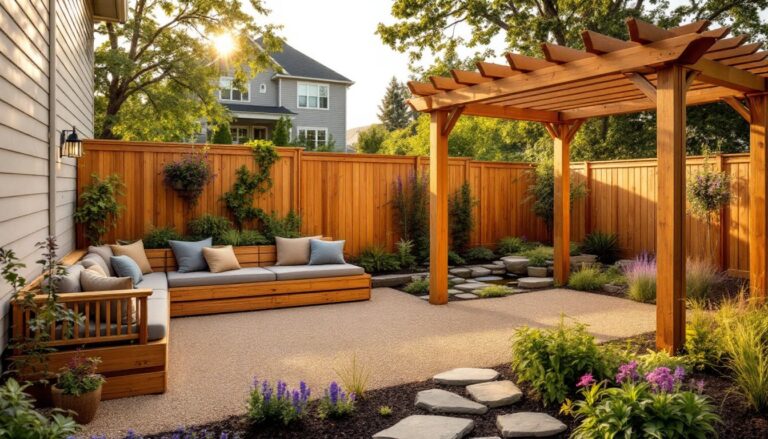
Every square foot of lawn replaced with hardscaping is a square foot that never needs mowing, fertilizing, or edging. Gravel pathways, flagstone patios, and permeable pavers all cut maintenance while adding structure and visual interest.
Gravel is the most budget-friendly option. A 3-inch layer of ¾-inch crushed stone over landscape fabric suppresses weeds and drains quickly. Edging, steel, aluminum, or plastic, keeps gravel contained and prevents it from migrating into planting beds. Figure roughly $2–$4 per square foot installed, depending on region and stone type.
Flagstone or cut bluestone set in decomposed granite or polymeric sand creates a more formal look. Irregular flagstone feels cottage-style: cut rectangular pavers read modern. Both need a compacted base of 4–6 inches of crushed aggregate for stability and to prevent settling. Expect $12–$20 per square foot installed.
Permeable pavers allow rainwater to infiltrate rather than run off, reducing pooling and erosion. They’re especially useful on sloped lots or areas subject to local stormwater regulations. Installation requires excavation, a gravel base, and bedding sand, not a beginner project, but well within the skill set of a confident DIYer with a plate compactor (rentable for about $75/day).
Be honest about scope. Removing sod, grading, and compacting base material is heavy work. For projects over 200 square feet, hiring an excavator for a half-day can save a weekend of back-breaking labor. Always call 811 before digging to mark underground utilities.
Mulch and Ground Covers for Weed Suppression
Bare soil is an open invitation to weeds. Mulch and living ground covers both prevent weed seeds from germinating by blocking light, but they serve different roles.
Organic mulch, shredded hardwood, pine bark, or cedar chips, breaks down over time, adding organic matter to soil. A 3-inch layer is standard: thick enough to suppress weeds, thin enough that it won’t smother plant crowns or promote rot against woody stems. One cubic yard covers roughly 100 square feet at 3 inches. Mulch settles and decomposes, so plan to top-dress annually or every other year. Avoid mulch volcanoes around tree trunks: keep it pulled back 2–3 inches from bark to prevent moisture buildup and pest issues.
Landscape fabric under mulch helps in high-weed areas but isn’t foolproof. Weed seeds blow in and root on top of fabric in the mulch layer. Fabric also degrades in sun and can make future replanting a hassle. For permanent plantings, skip it and rely on mulch depth. For gravel beds, use commercial-grade woven geotextile, not the flimsy black plastic sold at big-box stores.
Ground covers are low-growing perennials that spread to form a living carpet. Creeping thyme, sedum, and ajuga work in sun: pachysandra and vinca minor (periwinkle) handle shade. Once established, they choke out most weeds and need zero mulching. The trade-off: they take one to two seasons to fill in. Plant them on 12-inch centers and mulch the gaps until they spread. Avoid aggressive spreaders like English ivy or bishop’s weed, which will invade adjacent beds and are nearly impossible to eradicate.
Smart Watering Solutions and Drought-Tolerant Options
Watering is the most time-consuming maintenance task, and the easiest to automate or eliminate. Drip irrigation delivers water directly to root zones with minimal evaporation, cutting water use by 30–50% compared to sprinklers. A basic drip kit with a battery-powered timer costs $50–$100 and installs in an afternoon with no special tools. Run ½-inch distribution tubing along planting beds, insert ¼-inch emitter lines at each plant, and secure with landscape staples. Most timers allow programming for early morning watering, which reduces fungal issues and water loss.
For larger renovations, consider a zoned smart irrigation controller that adjusts schedules based on local weather data. Models from brands like Rachio or Rain Bird integrate with Wi-Fi and cost $150–$250. They’re overkill for a small front bed, but invaluable for properties with mixed sun/shade zones or slopes.
Drought-tolerant plants reduce or eliminate the need for supplemental watering once established. In arid climates, xeriscaping, landscaping designed around water conservation, relies on succulents, ornamental grasses, and silvery-leaved plants like Russian sage and artemisia. Even in temperate zones, choosing plants adapted to dry spells (coneflower, sedum, yarrow, ornamental onion) means summer vacations don’t require hiring a plant-sitter.
One caution: all plants need consistent water during their first growing season to establish roots. “Drought-tolerant” doesn’t mean “plant it and forget it” on day one. Water new plantings two to three times per week for the first month, then taper off as roots spread.
Low Maintenance Design Strategies for Curb Appeal
A low maintenance yard still needs intentional design to avoid looking like a gravel lot with random shrubs. A few strategic choices deliver high visual impact without high upkeep.
Mass plantings of a single species create bold color and texture blocks that read clearly from the street. Five Karl Foerster feather reed grasses grouped together make a statement: one looks lost. Repetition also simplifies care, one plant type means one set of requirements.
Defined edges are non-negotiable. Steel, aluminum, or poly edging (installed with the top ½ inch below grade for mower clearance) keeps mulch, gravel, and turf separated. Clean lines make even simple designs look intentional. A half-moon edger or a flat spade works for bed prep: metal edging costs about $1–$2 per linear foot.
Evergreen structure provides year-round interest without seasonal replanting. Boxwood, dwarf Alberta spruce, or inkberry holly anchor beds and frame entryways. In warmer zones, rosemary, lantana, or Texas sage stay green and require only an annual trim.
Reduce lawn strategically. Instead of eliminating turf entirely, shrink it to a central panel bordered by wide planting beds or gravel. A 10-foot-wide mowable strip is easier to maintain than a sprawling lawn with fiddly curves. For tight side yards or shady areas where grass struggles, replace it with shade-tolerant ground cover or mulched beds, don’t fight losing battles.
Finally, resist the urge to overplant. New landscapes look sparse, so homeowners cram in too many plants. Give perennials room to reach mature size. The first two years may look lean, but by year three, the design will fill in, and there won’t be a need for constant dividing, transplanting, or ripping out overcrowded plants.
Conclusion
Low maintenance landscaping isn’t about abandoning the front yard, it’s about working smarter. Native plants, hardscaping, mulch, and smart watering all compound over time, saving hours every month and hundreds of dollars each year. The payoff isn’t just convenience: it’s a front yard that looks better with less effort, increasing both pride of ownership and curb appeal for the long haul.