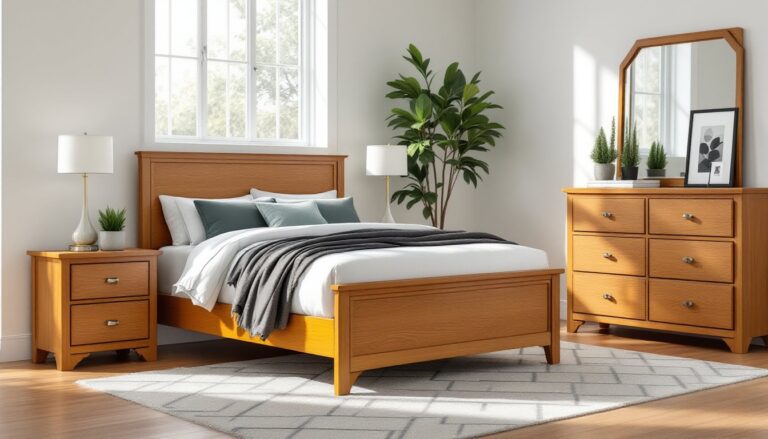
Japandi design merges Japanese minimalism with Scandinavian functionality, creating a bedroom aesthetic that’s both serene and livable. It’s not about bare rooms or cold austerity, it’s about intentional choices, natural materials, and furniture that earns its place. For homeowners tired of visual clutter or trend-chasing, Japandi offers a reset: fewer pieces, better quality, and a space that actually feels restful. This guide walks through the furniture essentials, materials, and layout strategies that make Japandi bedrooms work in 2026.
Table of Contents
ToggleKey Takeaways
- Japandi bedroom furniture merges Japanese minimalism with Scandinavian functionality to create a calm, uncluttered space that prioritizes intentional design over visual clutter.
- Platform beds positioned low to the ground (8–14 inches), paired with solid wood nightstands and dressers, form the foundation of an effective Japandi bedroom layout.
- Use natural finishes like oil or hard wax on woods such as oak, walnut, and ash to highlight grain and patina while maintaining the cohesive, matte aesthetic that defines Japandi style.
- Arrange furniture to maximize negative space and clear sightlines—float the bed slightly from the wall, position the dresser opposite rather than at the foot, and leave 40–50% of shelving empty.
- Limit Japandi bedroom accessories to one or two intentional pieces of wall art and soft, layered lighting with dimmable overhead fixtures and linen-shaded bedside lamps.
What Is Japandi Style and Why Is It Perfect for Bedrooms?
Japandi combines wabi-sabi, the Japanese philosophy of finding beauty in imperfection, with hygge, the Scandinavian emphasis on coziness and simplicity. The result is a bedroom that balances clean lines with warmth, avoiding the sterile feel of pure minimalism.
In practical terms, Japandi furniture avoids ornate details, bright colors, and unnecessary bulk. Pieces are low to the ground, often handcrafted or made from solid wood rather than veneered particleboard. Joints are visible and celebrated, not hidden. Surfaces show natural grain and subtle texture.
Bedrooms benefit from this approach because they function best when calm and uncluttered. A Japandi bedroom typically features 4–6 major furniture pieces: a bed, nightstands, a dresser, and maybe a bench or low shelving unit. Each piece serves a clear purpose. There’s no “accent furniture” for its own sake.
The style also suits small spaces exceptionally well. Low-profile beds and open storage create the illusion of height and airiness. Neutral tones reflect light without overwhelming the eye. And because Japandi avoids trends, the furniture ages gracefully, no need to replace pieces every few years as styles shift.
Essential Japandi Bedroom Furniture Pieces
Platform Beds and Low-Profile Frames
The Japandi bed sits close to the floor, echoing traditional Japanese futon platforms while maintaining Western mattress compatibility. Platform beds with integrated slat systems eliminate the need for box springs, reducing visual bulk and simplifying the bed frame.
Look for frames constructed from oak, walnut, or ash, hardwoods with visible grain and natural color variation. Avoid stained finishes: Japandi prioritizes the wood’s inherent tone. Frame height typically ranges from 8 to 14 inches from floor to mattress top, compared to 20–24 inches for standard Western beds.
Some platform beds include low-profile headboards, usually no taller than 30–36 inches, made from vertical slats or a single solid panel. Others forgo headboards entirely, relying on wall-mounted accent pieces or leaving the wall bare. Either approach works, but the headboard should never dominate the room.
For DIYers comfortable with joinery, building a simple platform bed is achievable with 2×6 or 2×8 lumber (actual dimensions 1.5″ × 5.5″ or 1.5″ × 7.25″), a circular saw or miter saw, and wood glue. The key is precise miters and a smooth finish, no rough edges or visible screws. If purchasing, expect to pay $600–$1,800 for a queen-size solid wood platform bed, depending on wood species and joinery quality.
Natural Wood Nightstands and Dressers
Japandi nightstands are small, unadorned, and functional. Most measure 18–24 inches wide and stand 20–26 inches tall, matching or sitting slightly lower than mattress height. They rarely include more than one or two drawers. Open shelving is common, as are designs with tapered legs that lift the piece visually off the floor.
Dovetail or box joints are preferred over butt joints hidden by veneer. If the joinery is well-executed, it’s left visible as a design feature. Hardware is minimal, think brushed brass pulls or simple wooden knobs, not ornate handles.
Dressers follow the same principle: low, long, and linear. A typical Japandi dresser might be 48–60 inches wide, 30–36 inches tall, and 18 inches deep, with 6–9 drawers arranged in two or three rows. Drawer fronts are flat, sometimes with a subtle finger pull routed into the top edge instead of external hardware.
Both nightstands and dressers should match or complement the bed frame in wood tone and finish. Mixing species works if the undertones align, pairing cool-toned ash with warm walnut creates visual tension. Stick to woods within the same temperature family.
Avoid veneered MDF or particleboard unless budget is the deciding factor. Solid wood costs more upfront but lasts decades and can be refinished. A quality solid oak dresser runs $800–$2,000: a comparable veneer piece might cost $300–$600 but won’t hold up to daily use or moves.
Materials and Colors That Define Japandi Furniture
Japandi furniture relies on a narrow material palette: light to medium woods, natural textiles, and matte finishes. The goal is tactile warmth without visual noise.
Wood species include white oak, ash, beech, walnut, and teak. Oak and ash provide light, neutral tones with prominent grain. Walnut introduces deeper brown hues but should be used sparingly, a walnut dresser against light oak nightstands, for example. Teak works for accent pieces or benches due to its natural oil content and durability.
Finishes should be low-sheen: natural oil, hard wax, or matte polyurethane. High-gloss lacquer or satin finishes feel too formal. Oil finishes highlight grain and patina over time, aligning with wabi-sabi principles. They require occasional reapplication, usually once or twice a year with tung or linseed oil, but they’re easy to maintain and repair.
Color stays within a tight range: off-white, warm gray, beige, taupe, and soft charcoal. Bedding and textiles can introduce slightly darker tones, think clay, rust, or muted olive, but nothing saturated or bright. The room should feel cohesive at a glance, not a patchwork of competing hues.
Textiles matter as much as wood. Linen, cotton, wool, and jute are standard. Linen bedding in natural or stone-washed finishes adds texture without pattern. Wool throw blankets or jute area rugs anchor the space and soften hard surfaces. Avoid synthetics, prints, or anything glossy.
Metal accents, if present, are brushed brass, matte black, or natural steel, never chrome or polished nickel. These appear in light fixtures, drawer pulls, or bed frame details, but sparingly.
How to Arrange Japandi Bedroom Furniture for Maximum Serenity
Japandi layout prioritizes negative space and sightlines. Furniture shouldn’t crowd walls or block natural light. The bed is the focal point, but it doesn’t dominate.
Place the bed against the longest wall, centered if possible. Leave at least 24–30 inches of clearance on each side for easy movement and making the bed. If space allows, float the bed a few inches from the wall rather than pushing it flush, it reduces visual weight and improves air circulation.
Flank the bed with matching nightstands, but don’t box it in. If the room is narrow, use one nightstand and leave the other side open. Asymmetry is acceptable in Japandi design as long as it’s intentional, not accidental.
Position the dresser opposite the bed or along an adjacent wall, never at the foot of the bed where it blocks the sightline. If the dresser has a mirror, mount it directly above rather than leaning it, leaning feels unfinished in this style.
Keep pathways clear. A Japandi bedroom should allow straight-line movement from the door to the bed, the bed to the closet, and the bed to any windows. Avoid placing furniture in corners unless it’s a reading chair or low stool.
Limit decorative objects. A single piece of wall art, usually a framed print, woven textile, or ceramic piece, is enough. Avoid gallery walls, tchotchkes, or anything that competes for attention. If shelving is present, leave 40–50% of it empty. The empty space is part of the design.
Lighting should be soft and layered. Overhead fixtures work best when dimmable. Add a table lamp or wall-mounted sconce beside the bed with a linen or paper shade. Avoid ornate chandeliers or multi-bulb fixtures.
Finally, conceal clutter. Japandi doesn’t mean everything is on display. Use dresser drawers, under-bed storage boxes (in natural materials like canvas or woven rattan), or a closed wardrobe. The visible surfaces should stay clear.
Conclusion
Japandi bedroom furniture isn’t about following a formula, it’s about making deliberate choices with quality materials and functional design. The style works because it eliminates excess and focuses on what actually contributes to rest and calm. Start with a low platform bed and natural wood case goods, keep finishes matte and wood tones cohesive, and resist the urge to fill every surface. The result is a bedroom that feels intentional, uncluttered, and built to last.