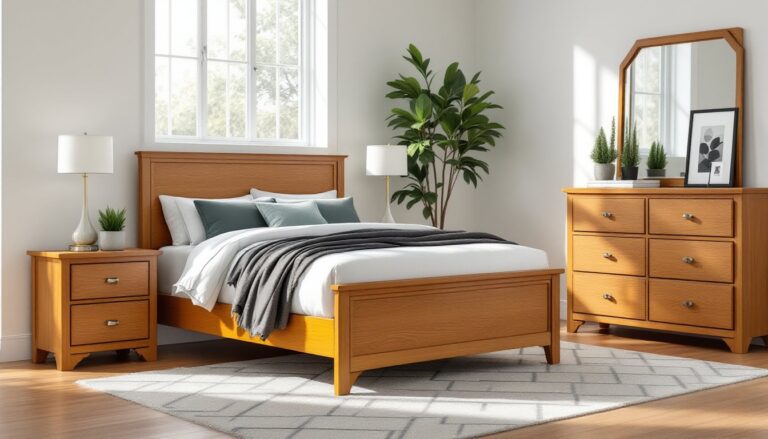
A California king bed is an investment in comfort, but it demands furniture scaled to match. At 84 inches long and 72 inches wide, a Cal king is narrower than a standard king yet four inches longer, a detail that ripples through every furniture choice in the room. Nightstands that work beside a queen suddenly look puny. Dressers need repositioning. Even rug dimensions shift. This guide walks through the practical side of furnishing around a California king: what fits, what works, and how to avoid the common pitfalls that leave a bedroom feeling off-balance.
Table of Contents
ToggleKey Takeaways
- California king bedroom furniture must be scaled to the bed’s narrower width (72 inches) and extra length (84 inches), requiring specific headboards, frames, and bedding that standard king pieces cannot accommodate.
- Nightstands should be 20–24 inches wide and 16–18 inches deep to remain proportional to a Cal king, while platform bed frames with center support beams and six legs prevent sagging under the 100–180 pound mattress weight.
- Rugs should measure at least 9 x 12 feet to extend 18–24 inches beyond the bed’s sides and foot, and room layouts require at least 12 x 14 feet of space to avoid a cramped appearance.
- Style choices for California king furniture—from modern platform beds to rustic reclaimed wood frames—should prioritize solid wood or quality veneer construction, with full-extension drawer slides in dressers for durability.
- Specialty bedroom stores and custom builders offer better quality control than discount chains, with lead times of 10–16 weeks, though online retailers provide broader style ranges if dimensions are verified carefully before purchase.
What Makes California King Furniture Different?
California king furniture isn’t just larger, it’s proportioned differently than standard or eastern king pieces. The bed itself occupies roughly 42 square feet of floor space, compared to 44.5 for a standard king. That two-foot difference matters less than the shape: Cal kings are slimmer and longer, which changes how furniture relates to the bed.
Headboards for California kings typically span 72–76 inches wide (accounting for frame overhang), compared to 76–80 inches for standard kings. Using a standard king headboard on a Cal king leaves gaps or poor proportion. Most manufacturers produce Cal king-specific headboards, but not all bedroom furniture lines include them, a key consideration when shopping matched sets.
Bed frames must accommodate the exact mattress dimensions. A standard king frame won’t fit: the mattress will either overhang or shift. Platform frames, panel beds, and upholstered frames designed for Cal kings usually include integrated support slats spaced 3–4 inches apart to eliminate the need for a box spring, though some traditional frames still require one.
Footboards are less common with California kings because the extra length makes getting in and out more awkward. When present, they sit 84 inches from the headboard, which can crowd rooms under 14 feet long.
Bedding and furniture scale together. A Cal king requires specific fitted sheets (72 x 84 inches), and comforters should measure at least 104 x 96 inches to drape properly. When selecting nightstands and dressers, proportions should reflect the bed’s footprint, too-small pieces look mismatched, while oversized furniture can overwhelm the layout.
Essential California King Bedroom Furniture Pieces
Bed Frames and Headboards
The frame is the foundation. Platform frames are popular for Cal kings because they eliminate box springs and sit lower to the ground, usually 10–14 inches to the mattress surface. This works well in rooms with standard 8-foot ceilings, keeping sightlines open. Look for frames with center support beams and at least six legs: Cal king mattresses weigh 100–180 pounds, and frames without adequate support will sag or develop squeaks.
Panel beds (frames with solid headboards and footboards) offer traditional aesthetics but require careful clearance planning. Measure from the wall to the foot of the bed before committing, footboards add 2–6 inches of depth and make bedding changes more cumbersome.
Upholstered frames with wingback or tufted headboards provide built-in comfort for sitting up in bed. Fabric or leather wraps a wood frame, usually plywood or engineered lumber. Check that corner blocks and joints are glued and screwed: upholstered frames rely on hidden joinery that can loosen over time.
Adjustable bases pair well with Cal kings, especially for couples with different sleep preferences. Split Cal king bases (two twin XL adjustables side-by-side) allow independent positioning but require a specialized frame or wall-mounted headboard.
Headboards are sold separately or as part of a complete bed frame. Standalone headboards mount to the wall or attach to a frame via bolt-on brackets. Heights range from 48 inches (low profile) to 72+ inches (statement pieces). Taller headboards balance the bed’s length but can dominate small rooms.
Nightstands and Dressers
Nightstands flanking a Cal king should be proportional to the bed’s height and length. A mattress on a platform frame sits around 24–26 inches high (including the mattress), so nightstand tops at 24–28 inches align well with the sleeping surface, easier to reach for a phone or glass of water without sitting up fully.
Width and depth matter. Nightstands 20–24 inches wide won’t get lost beside a 72-inch-wide bed. Depth of 16–18 inches provides drawer or shelf space without protruding awkwardly into walkways. If the room layout requires nightstands against side walls, shallower 12–14 inch depths keep pathways clear.
Dressers anchor the room opposite the bed or along side walls. A standard 6-drawer dresser (roughly 60 inches wide, 18 inches deep, 32 inches tall) balances a Cal king without competing visually. Taller chest of drawers (5–6 drawers vertical, around 50 inches high) work in narrow rooms where floor space is tight.
Matching wood species and finish across pieces creates cohesion, but mixing materials, say, a wood bed frame with metal-and-wood nightstands, can add visual interest if hardware and proportions align. Avoid combining bulky, ornate furniture with streamlined modern pieces: the contrast reads as accidental rather than intentional.
Choosing the Right Style for Your Space
Style choice should account for room size, ceiling height, and architectural context. California king furniture works in multiple aesthetics, but proportion is non-negotiable.
Modern and contemporary styles favor low-profile platform beds, often in walnut, oak, or matte-finished engineered wood. Clean lines, minimal ornamentation, and integrated LED lighting or charging ports are common. Nightstands often float on wall-mounted brackets or feature handleless push-latch drawers. This style suits rooms at least 12 x 14 feet, where the horizontal emphasis doesn’t crowd sightlines.
Rustic and farmhouse designs lean on reclaimed wood, distressed finishes, and chunky joinery. Bed frames may include 4×4 or 6×6 posts at the corners, adding visual heft that requires higher ceilings (9+ feet) to avoid a top-heavy look. Nightstands and dressers often feature plank-style drawer fronts and metal pulls or leather straps.
Transitional furniture blends traditional and modern: a wood bed frame with an upholstered headboard, or dressers with classic proportions but simplified hardware. This versatility suits most room sizes and allows easier updates, swap out bedding and accessories without replacing furniture.
Industrial styles mix metal frames (usually powder-coated steel or iron pipe) with wood planks or leather. Cal king industrial beds often use exposed bolts and rivets as design features. Nightstands may incorporate steel mesh, casters, or reclaimed wood tops. Industrial works best in loft-style spaces or rooms with concrete, exposed brick, or open ductwork.
Finish durability matters. Solid wood, oak, maple, cherry, walnut, ages well and can be refinished. Veneer over plywood or MDF is lighter and less expensive but vulnerable to moisture and chips. Full-extension drawer slides (ball-bearing) outlast cheaper euro-style or side-mount slides, especially in dressers storing heavy clothing.
Space Planning and Layout Tips
A California king demands deliberate layout. Start with clearances. Building codes don’t dictate bedroom furniture placement, but ergonomic standards recommend 36 inches of clearance on each side of the bed for comfortable movement, dressing, and bed-making. Rooms smaller than 12 x 16 feet often can’t accommodate that on all sides.
Measure the room before buying. Use painter’s tape on the floor to outline the bed’s 72 x 84-inch footprint, plus nightstands. Walk the space. Open and close imaginary drawers. Swing the door. If the layout forces sideways shuffling or blocks closet access, reconsider furniture scale or placement.
Centering the bed on the longest wall is standard, but not always practical. In narrow rooms (under 12 feet wide), placing the bed along the shorter wall can free up space for a dresser or seating area. Corner placement works in very large rooms but sacrifices symmetry and typically requires relocating nightstands.
Leave at least 6–8 inches between the bed frame and walls to allow bedding to drape and make tucking sheets easier. If the headboard mounts to the wall, factor in its thickness when positioning the frame.
Ceiling height affects furniture height. In rooms with 8-foot ceilings, avoid tall headboards (60+ inches) and high-profile frames: they compress the visual space. Nine- or ten-foot ceilings handle taller pieces without issue.
Rugs should extend 18–24 inches beyond the sides and foot of the bed. For a Cal king, that means an area rug at least 9 x 12 feet, sometimes 10 x 14 in larger rooms. Too-small rugs make furniture appear disconnected from the floor.
Lighting placement follows furniture. Wall-mounted sconces at 55–60 inches from the floor (to the center of the fixture) flank the headboard without crowding nightstand space. Pendant lights work if ceilings are high, but hang them 30–36 inches above the nightstand surface, not directly over the pillows.
Where to Buy California King Bedroom Furniture
California king furniture availability varies. Not every manufacturer or retailer stocks Cal king-specific pieces, so sourcing requires extra attention.
National furniture chains (Ashley, Rooms To Go, Bob’s Discount Furniture) typically carry a selection of Cal king frames, headboards, and matched bedroom sets. Inventory leans toward contemporary and transitional styles. Expect 6–12 week lead times for special orders and limited customization options.
Online retailers (Wayfair, Overstock, Amazon) offer broader style and price ranges, from budget particle board frames under $300 to solid wood sets exceeding $3,000. Read dimensions carefully, some listings mislabel standard kings as Cal kings. Check return policies: oversized furniture often incurs restocking fees or is non-returnable once unboxed.
Specialty bedroom stores (Bassett, Ethan Allen, Pottery Barn) provide better quality control and customization: choice of wood species, finish, hardware, and upholstery fabric. Prices run higher, but construction, dovetail joinery, solid wood drawer boxes, felt-lined drawers, justifies the cost for long-term use. Lead times stretch 10–16 weeks for custom builds.
Local woodworkers and custom builders can design one-off pieces tailored to exact room dimensions and style preferences. Provide drawings or photos along with room measurements. Custom work costs more upfront but solves layout challenges and ensures precise fit. Ask for references and photos of completed work, especially joinery and finish quality.
Secondhand and estate sales occasionally yield solid wood Cal king furniture at steep discounts, but availability is inconsistent. Inspect joinery, drawer slides, and finishes for damage. Refinishing and hardware replacement can restore older pieces for less than buying new.
When comparing prices, factor in delivery and assembly fees. Many retailers charge $100–$300 for white-glove delivery (room placement and assembly), while others offer only curbside drop-off. Assembling a Cal king bed frame and dresser typically takes 2–4 hours with two people and basic tools, drill/driver, Allen wrenches, and a rubber mallet.