A small front yard doesn’t have to mean hours of mowing, pruning, and weeding every weekend. Homeowners looking for curb appeal without the constant upkeep can achieve impressive results by pairing smart design with low-maintenance plants and materials. The key is choosing features that look polished year-round but don’t demand regular intervention, think native grasses instead of turf lawns, permeable pavers instead of weed-prone beds, and evergreen shrubs instead of finicky annuals. With the right approach, even a compact space can deliver big visual impact while freeing up time for projects that actually need attention.
Table of Contents
ToggleKey Takeaways
- Small front yard landscaping thrives on low-maintenance design using native plants, drought-tolerant ground covers, and hardscaping materials that reduce mowing, watering, and weeding.
- Replace traditional turf lawns with alternatives like clover lawns, ornamental grasses, or permeable pavers—solutions that free up time while maintaining curb appeal.
- Layer plants by height and bloom time (trees, shrubs, ground covers) combined with evergreens to ensure year-round visual interest without seasonal die-back or bare patches.
- Strategic use of mulching, metal edging, and hardscaping can occupy 40–60% of a small front yard while eliminating routine maintenance and improving drainage.
- Native plants eliminate the need for supplemental water, fertilizer, and pest control by naturally thriving in local soil and climate conditions—check your county extension office for region-specific recommendations.
- A drip irrigation system with a timer reduces water use by 30–50% compared to overhead sprinklers and simplifies care for low-maintenance front yards.
Why Low-Maintenance Landscaping Is Perfect for Small Front Yards
Small front yards present unique challenges, limited square footage, high visibility from the street, and often awkward proportions between the house and curb. Traditional landscaping approaches that work for sprawling suburban lots (expansive lawns, mixed perennial borders, seasonal color rotations) quickly become maintenance traps in tight spaces.
Low-maintenance strategies solve three problems at once. First, they reduce labor. Fewer plants mean less pruning, deadheading, and fertilizing. Hardscaping elements like gravel or pavers eliminate mowing and edging entirely. Second, they cut water use. Drought-tolerant plants and mulched beds require far less irrigation than thirsty turf grass, which matters both for utility bills and in regions with water restrictions. Third, they improve year-round appearance. Native shrubs and evergreen ground covers don’t go dormant or leave bare patches in winter, so the yard looks intentional even in off-seasons.
From a practical standpoint, small yards also limit what equipment homeowners can reasonably use. Maneuvering a riding mower or bulky aerator in a 20-by-30-foot space is inefficient. Designing around that constraint, rather than fighting it, makes the whole property easier to manage. It’s not about cutting corners: it’s about aligning plant selection and layout with the realities of the site.
Native Plants and Drought-Tolerant Ground Covers
Native plants are the backbone of low-maintenance front yard design because they’ve evolved to thrive in local soil and climate conditions without supplemental water, fertilizer, or pest control. A homeowner in the Southwest might plant desert marigold (Baileya multiradiata) or autumn sage (Salvia greggii), while someone in the Pacific Northwest could use kinnikinnick (Arctostaphylos uva-ursi) or sword fern (Polystichum munitum). Check with the local county extension office or native plant society for region-specific recommendations.
Drought-tolerant ground covers replace traditional turf in areas where foot traffic is light. Creeping thyme (Thymus serpyllum) tolerates occasional stepping and releases fragrance when brushed. Blue star creeper (Isotoma fluviatilis) forms a dense, low mat that stays green with minimal water once established. For shadier spots, Ajuga (bugleweed) spreads quickly and produces short flower spikes in spring.
Installation requires upfront effort but pays off long-term. Remove existing turf with a sod cutter (rentals run around $90/day at most home centers). Amend the soil with 2–3 inches of compost if drainage is poor, then plant ground covers at spacing recommended on the nursery tag, usually 6 to 12 inches apart for quicker coverage. Mulch between plants with shredded bark or small pea gravel to suppress weeds during establishment. Water regularly for the first growing season, then taper off. Most native ground covers need only occasional deep watering once their root systems mature.
Evergreen shrubs provide structure and mass without the seasonal die-back of perennials. Compact varieties like dwarf mugo pine (Pinus mugo ‘Pumilio’), boxwood (Buxus ‘Green Gem’), or inkberry holly (Ilex glabra ‘Compacta’) stay below 3 feet and rarely need pruning. Plant them along the foundation or as focal points near the walkway, spacing them according to their mature width to avoid overcrowding.
Hardscaping Solutions That Minimize Yard Work
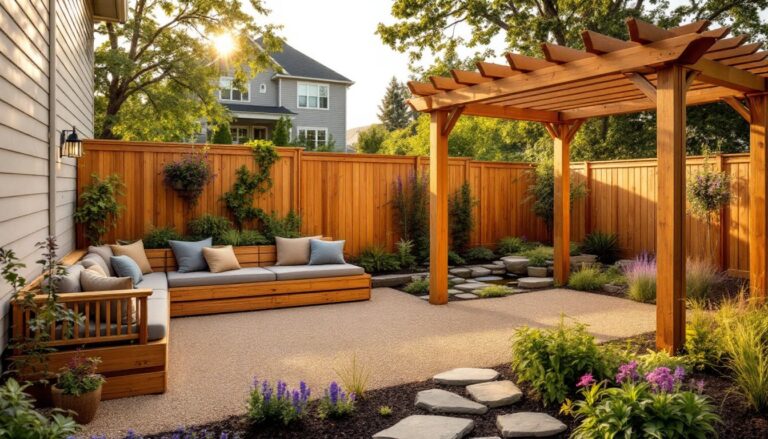
Hardscaping, patios, pathways, retaining walls, and gravel beds, eliminates the need for mowing, watering, and fertilizing by replacing plantings with durable materials. In a small front yard, hardscaping can occupy 40–60% of the total area while still delivering visual interest and function.
Permeable pavers are ideal for driveways, walkways, or parking strips. Unlike solid concrete, permeable systems (such as grid pavers filled with gravel or interlocking concrete units with wide joints) allow rainwater to infiltrate, reducing runoff and often satisfying local stormwater regulations. Installation involves excavating 8–12 inches deep, laying a compacted gravel base, then setting pavers on a sand leveling layer. Polymeric sand swept into the joints locks everything in place and resists weed growth. Expect to spend $8–$15 per square foot for materials and DIY labor, or $15–$25 per square foot installed by a contractor.
Decomposed granite (DG) or crushed stone works well for informal pathways and planting beds. DG compacts into a firm, natural-looking surface that’s easier on bare feet than sharp gravel. Spread it 2–3 inches deep over landscape fabric to prevent weeds, then wet and compact with a hand tamper or plate compactor (rental: $60–$80/day). Edge with steel or aluminum landscape edging to keep the material contained: plastic edging flexes and allows migration into lawn areas.
Retaining walls made from concrete block or natural stone can terrace a sloped front yard, reducing erosion and creating flat planting zones that are easier to mulch and weed. Walls under 3–4 feet typically don’t require engineering or permits in most jurisdictions, but always verify local codes before building. Use geogrid reinforcement and a compacted gravel backfill for stability. If the wall is taller or supports a driveway, hire a licensed contractor, failure can undermine foundations and sidewalks.
Gravel mulch around shrubs and trees serves double duty: it suppresses weeds and reflects heat, which benefits drought-tolerant plants. Use ¾-inch to 1½-inch river rock or lava rock rather than small pea gravel, which migrates easily. Install landscape fabric underneath, cut X-shaped slits for plants, and spread 2–3 inches of rock on top. Refresh the rock every few years by raking and adding a thin new layer.
Smart Design Strategies for Maximum Curb Appeal with Minimal Effort
Good design makes low-maintenance landscaping look intentional rather than neglected. The strategies below ensure year-round visual interest without requiring constant tweaks.
Mulching and Edging Techniques
Clean edges separate planting beds from hardscaping or turf, preventing grass encroachment and giving the yard a finished appearance. Metal or aluminum edging lasts decades and creates a crisp line: install it with the top edge slightly below soil level so mower blades can pass over without snagging. Plastic roll edging is cheaper but degrades in UV exposure and tends to heave in freeze-thaw climates. For a natural look, use a half-moon edger or flat spade to cut a 2–3 inch trench between bed and lawn, then refresh it annually in spring.
Mulch serves multiple functions: it moderates soil temperature, conserves moisture, suppresses weeds, and gives beds a uniform appearance. Shredded hardwood bark is widely available and breaks down slowly, adding organic matter to the soil. Apply 2–3 inches deep, keeping mulch pulled back a few inches from plant stems to prevent rot. Avoid dyed mulch in vegetable or edible landscapes: the colorants can leach into soil. Pine straw works well in acidic-soil regions and interlocks to resist washing away on slopes. Refresh mulch every 1–2 years or whenever the underlying soil becomes visible.
Layered Planting for Year-Round Interest
Layering combines plants of different heights, textures, and bloom times to create depth and visual continuity. Start with a canopy layer, a small ornamental tree like Japanese maple (Acer palmatum), crabapple (Malus spp.), or serviceberry (Amelanchier spp.) anchors the design and provides seasonal color (spring flowers, fall foliage, or persistent berries). Below that, place mid-height evergreen shrubs (2–4 feet) such as dwarf nandina or compact Oregon grape (Mahonia aquifolium ‘Compacta’). The lowest tier consists of ground covers and perennials like sedum, mondo grass (Ophiopogon japonicus), or hellebores (Helleborus spp.), which bloom in late winter when little else does.
Choose plants that peak at different times. For example, a spring-blooming azalea, summer-flowering daylily, fall-colored switchgrass (Panicum virgatum), and winter-berried holly ensure something catches the eye year-round. Evergreens provide the constant framework that holds the design together even when deciduous plants are dormant.
Group plants with similar water and light needs to simplify irrigation. A drip irrigation system with a timer delivers water directly to root zones and can reduce water use by 30–50% compared to overhead sprinklers. Install ½-inch polyethylene tubing along bed edges, then run ¼-inch spaghetti lines to individual plants with adjustable emitters (0.5–2 gallons per hour). Mulch over the tubing to hide it and reduce evaporation.
Low-Maintenance Lawn Alternatives That Look Amazing
Traditional turf lawns demand weekly mowing, regular fertilization, aeration, and pest control, maintenance that’s disproportionate to the usable benefit in a small front yard. Several alternatives deliver the visual continuity of a lawn without the upkeep.
Clover lawns (typically white clover, Trifolium repens) stay green with minimal water, fix nitrogen naturally (eliminating fertilizer), and grow only 4–8 inches tall, so mowing can drop to once a month or less. Seed at 4–8 ounces per 1,000 square feet in early spring or fall. Clover tolerates light foot traffic and attracts pollinators, though it can be slippery when wet.
No-mow or low-mow fescue blends include fine fescue varieties (Festuca rubra, F. ovina) that grow slowly and can be left unmown for a meadow look or mowed just a few times per season. These grasses tolerate shade and drought better than Kentucky bluegrass but don’t hold up to heavy foot traffic. Overseed at 5–7 pounds per 1,000 square feet into existing turf or start fresh by removing old sod.
Ornamental grasses like blue fescue (Festuca glauca), Japanese forest grass (Hakonechloa macra), or prairie dropseed (Sporobolus heterolepis) can be massed as a lawn substitute in areas where traffic is minimal. They provide movement and texture, require no mowing, and many stay attractive through winter. Plant in drifts or sweeps rather than rigid rows for a naturalistic effect.
Artificial turf is a hardscaping option that mimics the appearance of grass without any watering, mowing, or fertilizing. Modern products have improved significantly in realism, with varied blade lengths, thatch layers, and natural color variation. Installation requires a compacted base (crushed rock and decomposed granite), weed barrier, and perimeter edging. Costs run $8–$12 per square foot installed, and quality products carry 10–15 year warranties. Artificial turf heats up in direct sun, so it’s less comfortable for bare feet in hot climates, and it doesn’t provide the cooling or stormwater benefits of living ground covers.
Before committing to a full lawn replacement, test alternatives in a small section for one growing season. Observe how they perform under local conditions, heat, cold, shade, and the occasional wayward delivery truck, before scaling up.