Neighbors’ windows overlooking the deck. Street noise bleeding into the patio. A yard that feels more like a fishbowl than a sanctuary. Privacy issues turn outdoor spaces into underused square footage, and landscaping offers a living, breathing solution that adds value, beauty, and seclusion without the starkness of a fence. Strategic planting transforms exposed yards into private retreats, using plants as green walls that soften sound, block sightlines, and create defined outdoor rooms. Done right, privacy landscaping delivers year-round screening while improving curb appeal and ecosystem health.
Table of Contents
ToggleKey Takeaways
- Backyard privacy landscaping adds 10-15% to home value while creating usable outdoor living spaces without the rigid appearance of fencing.
- Evergreen trees and hedges like arborvitae and Eastern Red Cedar provide year-round screening; plant them 3-5 feet apart for solid coverage within 3-4 years.
- Fast-growing options like bamboo and willow hybrids deliver quick privacy results but require careful maintenance and consistent watering to sustain growth.
- Layering plants at three height levels—canopy trees, mid-level shrubs, and low-level groundcovers—creates more effective screening and better wind resistance than single-row hedges.
- Combining hardscaping like trellises and raised beds with living plants provides faster results while greenery matures, while native, drought-tolerant species minimize ongoing maintenance demands.
- Always check local codes for fence setbacks and permits before installing privacy structures or barriers over 6 feet tall.
Why Privacy Landscaping Matters for Your Outdoor Living
A backyard without privacy rarely gets used to its full potential. Homeowners skip morning coffee on the patio, avoid afternoon pool time, and abandon dinner plans outdoors, all because the space feels exposed.
Living privacy screens solve multiple problems at once. Unlike solid fencing, which can feel claustrophobic and requires permits in many jurisdictions (typically for structures over 6 feet), plantings create permeable barriers that reduce wind, filter noise, and support local pollinators. They also sidestep many HOA restrictions that limit fence materials or height.
Landscaping-based privacy adds property value. Mature trees and well-designed hedge lines consistently rank among the top landscaping features that appraisers note. A 10-15% increase in home value isn’t uncommon when thoughtful plantings frame the property and create distinct outdoor zones.
The key is understanding sightlines. Walk the yard at different times of day and identify problem views, a neighbor’s second-story window, a busy sidewalk, an adjacent driveway. Privacy plantings work best when they block the specific view angle, not just fill space. A 15-foot arborvitae hedge blocks ground-level sightlines but does nothing for a second-story overlook: that requires taller canopy trees or strategically placed structures combined with climbing vines.
Create Natural Barriers With Evergreen Trees and Hedges
Evergreens deliver year-round coverage, making them the backbone of any privacy planting plan. Deciduous trees have their place, but bare winter branches don’t block much.
Arborvitae (Thuja) varieties like ‘Green Giant’ and ‘Emerald Green’ are workhorses for privacy hedges. Green Giant grows 3-5 feet per year in ideal conditions, reaching 20-40 feet at maturity with a narrow 12-15 foot spread, perfect for tight side yards. Emerald Green stays more compact (12-15 feet tall, 3-4 feet wide) and handles shearing well for formal hedges. Plant them 3-5 feet apart for a solid hedge within 3-4 years.
Leyland Cypress grows even faster, up to 4 feet per year, but requires more space (15-25 foot spread at maturity). It’s prone to bagworms and canker in humid climates, so regular monitoring is critical. In the Midwest and Northeast, this is a go-to for quick privacy: in the Southeast, consider disease-resistant alternatives.
Eastern Red Cedar (Juniperus virginiana) tolerates poor soil, drought, and cold better than most evergreens. It’s slower (12-18 inches per year) but incredibly tough. The dense, pyramidal form provides excellent screening at 30-40 feet mature height.
For a softer look, Japanese Cedar (Cryptomeria japonica) or Canadian Hemlock (Tsuga canadensis) offer feathery texture. Hemlock prefers shade and consistent moisture: it’s not drought-tolerant but thrives in woodland edges.
Spacing matters. For a tight hedge, plant at half the mature width of the chosen species. For a staggered, naturalistic screen, offset two rows with plants spaced 8-10 feet apart in a zigzag pattern.
Fast-Growing Privacy Plants That Deliver Quick Results
Patience isn’t always realistic. Homeowners need privacy now, not in a decade. Fast-growers fill the gap, but they come with trade-offs.
Bamboo is the speed demon of privacy plants. Running bamboo like Phyllostachys aureosulcata can gain 3-5 feet per year and reach 20-25 feet, creating an impenetrable screen. The catch: it’s invasive. Install a 30-inch-deep HDPE root barrier around the planting area, or choose clumping varieties like Fargesia robusta, which stay contained but grow more slowly.
Willow Hybrid trees grow 6-10 feet per year, reaching 35-50 feet. They’re thirsty (require consistent watering) and weak-wooded (prone to storm damage), but nothing beats them for filling space fast. Plant 5 feet apart for a screen.
Privet (Ligustrum) hedges grow 2-3 feet per year and tolerate heavy pruning. They’re semi-evergreen in warmer zones (7-9), deciduous further north. Privets handle urban pollution and compacted soil well, making them ideal for city lots.
Forsythia, Lilac, or Ninebark (Physocarpus) work for homeowners who don’t mind seasonal screening. They leaf out early, provide spring blooms, and grow 2-3 feet per year. They won’t block views in winter, but they add visual density during the months the yard gets the most use.
A word of caution: fast growth often means high water and nutrient needs, plus more frequent pruning. Budget time for maintenance or choose moderate growers.
Layer Your Landscape With Multi-Level Screening Techniques
A single row of shrubs rarely delivers true privacy. Layering plants at different heights creates depth, blocks more sightlines, and looks less like a green wall.
Start with canopy trees (20+ feet) at the back or sides of the property line. These block second-story views and provide shade. Good choices: Eastern White Pine, Norway Spruce, or Oak varieties for deciduous interest.
Add mid-level evergreen shrubs or small trees (8-15 feet) in front of or staggered between the canopy layer. Skip Laurel (Prunus laurocerasus ‘Schipkaensis’), Nellie Stevens Holly, or Wax Myrtle fill this zone. Plant them 4-6 feet apart for screening.
Finish with a low-level planting (3-6 feet) of ornamental grasses, flowering shrubs, or groundcovers. This tier softens the hard line at ground level and adds seasonal color. Boxwood, Inkberry Holly, or Switchgrass (Panicum virgatum) work well.
Staggering plants in a naturalistic drift, rather than a straight line, creates visual interest and better coverage. Offset rows by 3-4 feet, varying species and heights.
This multi-tier approach also improves wind resistance. A solid hedge can act like a sail in strong wind: a layered planting filters airflow and reduces the risk of toppled plants.
Combine Hardscaping and Plants for Maximum Privacy
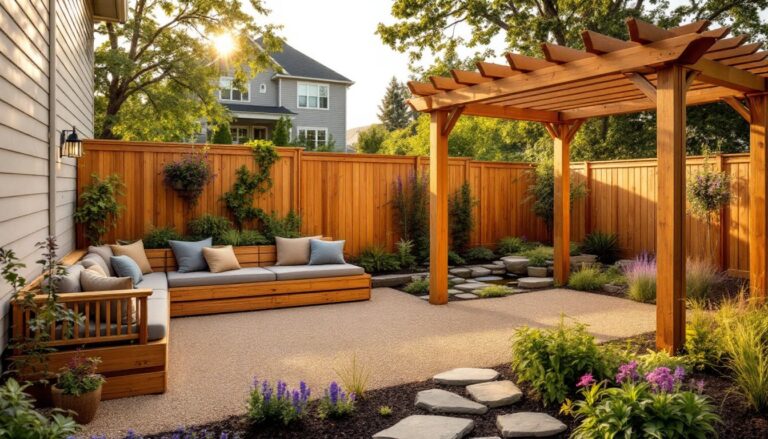
Plants alone can’t always solve every sightline problem, especially in tight urban lots or where immediate screening is needed. Combining fences, trellises, or walls with plantings delivers faster results and fills gaps while greenery matures.
A 6-foot cedar or vinyl privacy fence provides instant screening at ground level. Train climbing vines, Clematis, Climbing Hydrangea, or Boston Ivy, up the fence to soften the look and add vertical interest. Use a trellis or wire grid attached 2-3 inches off the fence surface to allow airflow and prevent wood rot.
Gabion walls (wire cages filled with stone) or decorative concrete block screens offer modern aesthetics and support for espaliered shrubs or vines. Pair them with container plantings of ornamental grasses or evergreen shrubs for mobility and seasonal updates.
Pergolas with lattice side panels create vertical screening on decks or patios without blocking airflow. Grow Wisteria, Trumpet Vine, or Hops up the posts. Be aware that Wisteria is aggressive and requires annual hard pruning to stay in bounds.
Raised planter beds along a fence line elevate plantings, improving sightline blocking without requiring taller fences. Use pressure-treated lumber (not ground-contact rated), composite, or stone for the raised bed walls. Fill with 18-24 inches of quality topsoil and compost before planting.
Always check local codes. Fences over 6 feet often require permits, and setback rules vary. Structures attached to property lines may need neighbor approval.
Low-Maintenance Privacy Solutions for Busy Homeowners
Not everyone wants to prune, water, and fertilize constantly. Low-maintenance privacy plantings exist, they just require smarter plant selection upfront.
Native plants adapted to the local climate and soil need far less input once established. Examples: Inkberry Holly (Ilex glabra) in the East, Toyon (Heteromeles arbutifolia) in California, Wax Myrtle (Morella cerifera) in the South. They resist pests, tolerate drought after the first year, and rarely need pruning.
No-shear hedges eliminate the need for regular trimming. Instead of formal boxwood or privet that need shearing three times a year, plant naturally dense, rounded shrubs like Dwarf Alberta Spruce, Otto Luyken Laurel, or Little Gem Magnolia. They hold their shape with minimal intervention.
Install drip irrigation on a timer during the establishment phase (first 1-2 years). After that, most evergreens and native shrubs can survive on rainfall alone in temperate zones. Use 2-3 inches of mulch (shredded hardwood or pine bark) around plantings to retain moisture and suppress weeds. Keep mulch 2-3 inches away from trunks to prevent rot.
Avoid high-maintenance species prone to pests or disease unless prepared to manage them. Skip Leyland Cypress in humid zones (bagworms, canker), Flowering Cherry (borers, leaf spot), and Bradford Pear (weak crotches, storm damage).
Choose slower-growing varieties if pruning isn’t in the schedule. A plant that adds 12 inches per year will need far less intervention than one pushing 4 feet annually.
Conclusion
Privacy landscaping transforms a yard from overlooked to sanctuary. Whether using evergreen hedges for year-round coverage, layering plants for depth, or mixing hardscaping with greenery, the goal is the same: block sightlines, reduce noise, and create outdoor rooms worth using. Start with a clear plan, choose plants suited to the climate and maintenance budget, and be realistic about timelines. With the right approach, a private backyard isn’t a luxury, it’s a achievable weekend project that pays dividends for years.