Transforming the front of a house with landscaping trees isn’t just about aesthetics; it’s about making a statement. Imagine stepping out your front door and being greeted by a majestic oak or a vibrant maple that not only enhances curb appeal but also adds a touch of personality. These leafy wonders can turn a dull entryway into a warm welcome, leaving neighbors wondering if you’ve hired a team of garden gnomes to work their magic.
Importance Of Landscaping Trees For Front Of House
Landscaping trees play a vital role in enhancing the aesthetics of a home’s front. They increase curb appeal significantly, making a property more attractive to visitors and potential buyers. Trees provide shade, which can cool the home during warmer months and reduce energy costs.
Tree placement affects the perception of space. Strategically planted trees create depth, framing the house and guiding the eye toward its architectural features. Stronger visual appeal comes from trees that bloom seasonally, offering color throughout the year.
Wildlife benefits from landscaping trees as well. Birds, squirrels, and insects thrive around trees, promoting a healthy ecosystem. A vibrant environment encourages natural behaviors, enriching the area around the home.
Noise reduction occurs through the strategic planting of trees. They act as natural sound barriers, absorbing noise pollution from nearby roads and creating a more peaceful experience at home.
Safety improves with well-placed trees. They can enhance visibility for drivers and pedestrians, while larger trees provide shelter for children playing outside.
Tree selection provides choices tailored to specific climates and environments. Choosing native tree species supports local biodiversity, ensuring healthy growth and adaptability.
Investing in landscaping trees yields long-term benefits. As they mature, trees increase property value, paying dividends over time.
Various species, like flowering dogwoods or magnolias, offer unique benefits. Each type not only contributes to beauty but also supports the local ecosystem, fulfilling multiple roles in landscaping.
Types Of Landscaping Trees
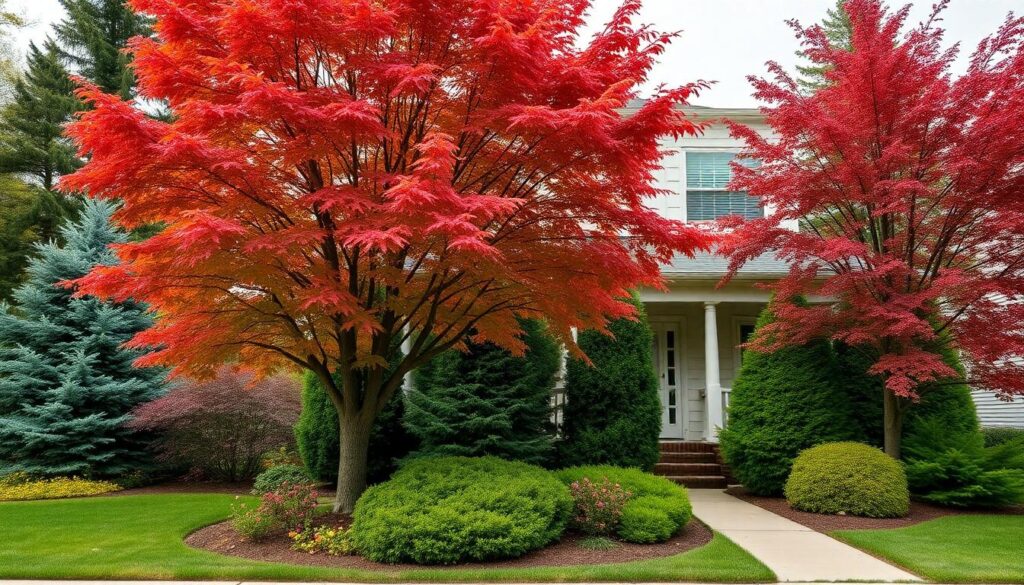
Landscaping trees significantly enhance the front of a house. Choosing the right types can make a substantial difference in both aesthetics and functionality.
Deciduous Trees
Deciduous trees shed their leaves annually, offering stunning seasonal changes. Popular options include maple and oak trees, which provide vibrant fall colors. Additionally, these trees can create shade during summer, keeping homes cooler. Their branches often feature intricate shapes, adding visual interest even in winter. Homeowners appreciate deciduous trees for their ability to support local wildlife by providing habitat and food sources. Flowering dogwoods also contribute beauty with seasonal blooms and berries that attract birds. The diverse species available makes it easy to find a perfect fit for any landscape.
Evergreen Trees
Evergreen trees maintain their green foliage throughout the year, ensuring consistent beauty. Options like spruces and pines stand out for their resilience in various climates. They serve as excellent privacy screens, blocking noise and views from neighbors. These trees offer a backdrop for seasonal decorations, enhancing curb appeal all year round. Additionally, evergreens improve energy efficiency by providing windbreaks during winter. Leyland cypress is another popular choice due to its fast growth and dense foliage. The year-round presence of these trees makes them a reliable choice for homeowners seeking longevity in their landscaping design.
Factors To Consider When Choosing Trees
Selecting the right trees involves careful consideration of several key factors that determine their success in a front yard landscape.
Climate And Soil Type
Climate plays a crucial role in tree selection. Different tree species thrive in specific temperature ranges and weather conditions. Homeowners should assess regional climates, including average rainfall and temperature extremes. Soil type is equally significant; trees flourish in well-drained sandy soils while others prefer clay or loamy conditions. Conducting a soil test provides valuable information on pH levels and nutrient content, guiding suitable selection. Choosing native trees often guarantees better adaptation to local climates and soils, enhancing survival rates and growth.
Size And Growth Rate
Tree size at maturity impacts overall landscape design. Large trees, like oaks, add grand visual appeal but require ample space. Smaller varieties, such as flowering dogwoods, suit tighter areas. Growth rate also influences landscaping plans. Fast-growing species, like Leyland cypress, provide quick coverage but may need more care initially. Slow-growing trees, while taking longer to establish, often have longer lifespans. Considering these dimensions helps homeowners balance aesthetics with practical maintenance needs.
Placement And Design Tips
Selecting the right placement and design for landscaping trees significantly enhances the front of a house. Thoughtful arrangements can create inviting and visually appealing spaces.
Symmetrical vs. Asymmetrical Layouts
Symmetrical layouts offer balanced aesthetics, often featuring identical trees on either side of a pathway or entrance. Such designs evoke a formal and organized feel, creating an elegant presentation. On the other hand, asymmetrical layouts introduce dynamic interest with varied tree heights and species. This approach promotes a natural, relaxed atmosphere, allowing for creativity around entryways and garden beds. Choosing between these layouts depends on personal preference and the home’s overall design.
Complementing Architectural Styles
Complementing architectural styles enhances the unity of the landscape and structure. For traditional homes, deciduous trees like oaks or maples add classic charm and timeless appeal. Modern architecture may benefit from sleek evergreen species such as Japanese pines or spruces, which provide clean lines and texture. Rustic cabins harmonize with native trees, blending seamlessly into the environment. Matching tree selection with architectural style ensures that the landscape reflects the home’s character, enhancing overall curb appeal.
Maintenance Considerations
Maintaining landscaping trees requires specific attention to ensure their health and longevity. Regular care tasks enhance both aesthetics and functionality.
Pruning And Health Care
Pruning promotes healthy growth and prevents disease. Remove dead or damaged branches at least once a year to improve air circulation and sunlight penetration. Inspect for pests and signs of tree diseases periodically. Proper watering, especially during dry spells, supports tree resilience. Fertilization every spring can provide essential nutrients for optimal growth. Minimize the use of herbicides near tree bases to prevent root damage. Selecting trees with disease-resistant traits helps maintain overall health with less effort. Consider hiring professionals for large trees, ensuring safety and effectiveness in care.
Seasonal Care Tips
Seasonal changes affect tree maintenance needs. During spring, inspect newly sprouted leaves for pests and adjust watering schedules accordingly. Summer care focuses on pruning excess growth and providing sufficient water during heatwaves. Autumn is ideal for mulching to retain soil moisture and protect roots from winter frost. Winter checks should include assessing snow load on branches and ensuring proper clearance from walkways. Preparing trees for cold weather challenges by wrapping trunks or adding protective coverings can prevent damage. Adapting care to seasonal shifts enhances the beauty and health of landscaping trees.
Landscaping trees play a crucial role in enhancing the front of a house. By carefully selecting and placing trees, homeowners can create a visually appealing and functional outdoor space. The right trees not only elevate curb appeal but also provide shade and energy savings while supporting local ecosystems.
Investing in landscaping trees is a long-term strategy that pays off in property value and aesthetic enjoyment. With a variety of tree species to choose from, it’s essential to consider the home’s architectural style and local climate. Regular maintenance ensures these trees thrive, contributing to a vibrant and inviting atmosphere. Ultimately, well-chosen landscaping trees can transform a house into a welcoming home.