In today’s world, a home isn’t just a roof over one’s head—it’s a canvas waiting for a touch of creativity. Modern house landscaping transforms ordinary yards into extraordinary outdoor escapes. Imagine stepping into your backyard and feeling like you’ve just entered a chic urban oasis rather than a patch of grass that needs mowing.
Overview of Modern House Landscaping
Modern house landscaping transforms outdoor spaces into extensions of the home, emphasizing aesthetics and functionality. The incorporation of clean lines, geometric shapes, and minimalist designs characterizes this approach. Native plants often take center stage, as they require less maintenance and support local ecosystems.
Focal points play an essential role in modern landscaping, whether through water features, sculptures, or unique plant groupings. Large planters enhance vertical interest and can frame entranceways beautifully. Pathways made of natural materials like stone or gravel lead visitors through manicured gardens, creating a seamless flow from home to landscape.
Sustainable practices gain traction in modern designs. Utilizing xeriscaping techniques minimizes water usage, while installing smart irrigation systems ensures efficient watering. Elements such as rain gardens or permeable paving promote natural water drainage and environmental health.
Outdoor living spaces receive significant attention. Patios, decks, and outdoor kitchens allow homeowners to enjoy their gardens while entertaining guests. Incorporating comfortable furniture and shade structures extends outdoor enjoyment even during warmer months.
Lighting significantly enhances the ambiance of modern landscapes. Strategically placing LED lights along pathways or highlighting specific plants creates a welcoming atmosphere at night. Combining functionality with artistry, modern landscaping embraces innovative solutions for everyday living.
Lastly, the integration of smart technology allows for enhanced control of outdoor spaces. Homeowners can automate lighting and irrigation through smartphone apps, adding convenience to their lifestyles. With these elements combined, modern house landscaping evolves into a dynamic and personalized outdoor retreat.
Key Elements of Modern Landscaping
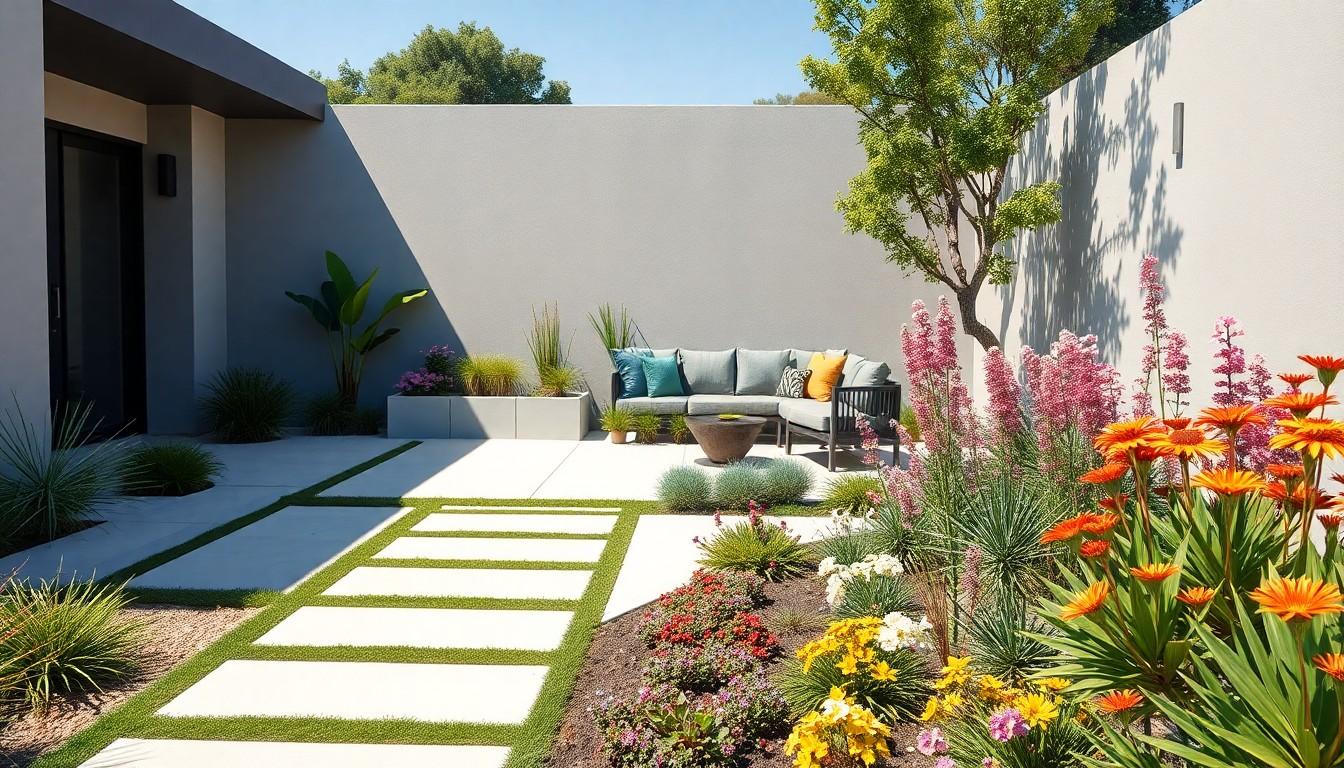
Modern landscaping prioritizes aesthetics and functionality. Key elements shape an inviting and dynamic outdoor space.
Minimalist Design Principles
Minimalist design principles drive modern landscapes. Clean lines and geometric shapes characterize layouts. Simplicity emphasizes open spaces and uncluttered views. Essential features, such as well-defined pathways and seating areas, enhance usability while minimizing visual noise. Attention to detail in plant placement and material selection ensures cohesion in design. Bold statements arise through the careful use of color contrast, allowing greenery and hardscape to complement one another seamlessly.
Use of Native Plants
Native plants play a crucial role in modern landscaping. These plants require less maintenance and conserve water while thriving in their natural habitats. They attract local wildlife, enhancing biodiversity in home landscapes. Selecting species suited for specific climates promotes ecosystem balance. Grouping native plants also creates visually striking displays, drawing attention to their unique characteristics. Support local ecosystems by opting for native varieties; doing so nurtures the environment and reduces landscape upkeep.
Hardscaping in Modern Landscapes
Hardscaping forms a key element of modern landscapes, offering structure and functionality. It focuses on creating visually appealing outdoor spaces that enhance both aesthetics and usability.
Pathways and Patios
Pathways guide movement through landscapes while maintaining a clean design. Materials like stone, concrete, or pavers establish defined routes, drawing attention to various areas. Patios serve as outdoor gathering spaces, often designed with durable materials that withstand weather elements. Families enjoy these areas for relaxation and socializing. The inclusion of seating and fire pits elevates comfort, allowing for year-round use. Lighting integrated along pathways enhances safety and mood, inviting exploration.
Water Features and Sculptures
Water features add a soothing element to modern landscapes. Fountains and ponds create focal points, reflecting light and enhancing visual interest. These features attract local wildlife, contributing to biodiversity. Sculptures provide an artistic touch, making bold statements within the garden. Various materials, such as metal and stone, offer diverse styles to complement landscaping. Positioning water features and sculptures strategically enhances the overall design, creating a harmonious blend of nature and art.
Sustainable Practices in Landscaping
Sustainable practices focus on enhancing both beauty and environmental health in modern landscaping. Homeowners increasingly seek to adopt methods that reduce resource consumption while preserving ecosystem integrity.
Eco-Friendly Materials
Eco-friendly materials serve as a foundation for sustainable landscaping. Using reclaimed wood for decks and fences minimizes the need for new timber while adding character. In addition, permeable pavers contribute to water absorption, reducing runoff and preventing erosion. Opting for low-VOC (volatile organic compound) paints and sealants ensures a healthier outdoor space. Incorporating recycled materials, such as bricks and stones, blends functionality with artistry. Natural stone brings durability and aesthetic appeal, harmonizing with surrounding plant life. Utilizing biodegradable mulch helps improve soil health and retains moisture, completing a holistic approach to sustainable landscape design.
Water Conservation Techniques
Water conservation techniques play a vital role in sustainable landscaping. Implementing xeriscaping involves selecting drought-resistant plants that thrive on minimal water. Smart irrigation systems further enhance water efficiency, utilizing sensors to determine soil moisture levels and adjust watering schedules accordingly. Capturing rainwater in barrels offers an eco-friendly alternative for garden irrigation. Additionally, grouping plants with similar water needs promotes efficient watering practices. Landscape designers often recommend deep-root watering to encourage robust root systems, enhancing drought resistance. Integrating mulch into garden beds reduces evaporation, maintaining soil moisture and promoting plant health.
Popular Trends in Modern House Landscaping
Modern house landscaping showcases various innovative trends that enhance outdoor aesthetics and functionality. Key among these trends are vertical gardens and outdoor living spaces.
Vertical Gardens
Vertical gardens utilize vertical surfaces for plant growth, maximizing space without sacrificing beauty. These installations improve air quality by filtering pollutants while providing a lush backdrop. Users often select a variety of plants, including ferns and flowering species, to create visually appealing displays. Maintenance requirements vary by plant type, yet many options thrive with minimal attention. Designers highlight structured layouts, ensuring harmony and balance among colors and textures. Overall, vertical gardens elevate urban environments by transforming walls into living art, attracting local wildlife and enhancing biodiversity.
Outdoor Living Spaces
Outdoor living spaces increasingly serve as extensions of the home, prioritizing comfort and social interaction. Patios, decks, and outdoor kitchens provide functional areas for relaxation and entertaining. Homeowners incorporate durable materials, like stone and wood, to create inviting settings that withstand the elements. Furnishings play a critical role, directly impacting usability and aesthetics. Comfortable seating arrangements often include fire pits and shade structures to enhance the experience. Lighting solutions, such as string lights and sconces, enhance ambiance while ensuring safety. As a result, these spaces foster a seamless connection between indoor and outdoor lifestyles, transforming backyards into vibrant retreats.
Modern house landscaping redefines outdoor spaces by blending beauty with functionality. It transforms yards into stylish retreats that reflect personal expression while supporting environmental sustainability. By incorporating native plants and sustainable practices, homeowners can create vibrant landscapes that thrive with minimal maintenance.
The focus on clean lines and minimalist design enhances the overall aesthetic, making each element purposeful. With features like outdoor living spaces and inviting pathways, these landscapes encourage social interaction and relaxation. As trends continue to evolve, embracing modern landscaping principles allows homeowners to cultivate an inviting atmosphere that seamlessly connects their indoor and outdoor lifestyles.