Imagine stepping into a world where your colonial home isn’t just a house but a charming piece of history, complete with a landscape that whispers tales of yesteryear. Colonial house landscaping isn’t just about planting a few flowers and calling it a day; it’s an art form that transforms your yard into a picturesque setting straight out of a storybook.
From meticulously trimmed hedges to vibrant flower beds that pop against classic architecture, the right landscaping can elevate your home’s curb appeal and make your neighbors green with envy. It’s time to ditch the cookie-cutter yards and embrace the elegance of colonial landscaping. After all, who wouldn’t want a garden that makes guests feel like they’ve stepped into a Jane Austen novel? Let’s dig into the enchanting world of colonial house landscaping and uncover how to create your own slice of history right outside your door.
Overview Of Colonial House Landscaping
Colonial house landscaping draws inspiration from 17th and 18th-century aesthetics. This style features elements that resonate with historical charm and emphasizes symmetry and structure. Homeowners often choose carefully designed pathways, which guide visitors towards the entrance. Boxwood shrubs serve as popular choices for creating defined borders and enhancing visual appeal.
Plant selections abound, with perennial flowers, herbaceous plants, and climbing vines commonly utilized. Color palettes typically comprise soft pastels and rich earth tones, evoking a tranquil and inviting ambiance. Seasonal changes bring new life to the landscape, with vibrant blooms in spring and autumn foliage enhancing the overall aesthetic.
Hardscape elements, such as brick patios and stone walls, complement plantings and provide functional spaces for gatherings. Garden furniture in classic styles, often constructed from wrought iron or wood, adds to the charm. Incorporating pathways with natural materials like gravel or brick creates continuity while maintaining a historical feel.
Features like trellises and arbors often support climbing plants to add depth and interest. Water elements such as fountains or ponds contribute a soothing soundscape while inviting reflection. Lighting should highlight key features, ensuring that the beauty of colonial landscaping is visible both day and night.
Attention to detail plays a vital role in achieving the desired harmony. Choosing the right plant placements, maintaining consistent pruning methods, and regularly assessing design elements contribute significantly. As a result, a well-executed colonial landscape transforms the home, enhancing curb appeal and reinforcing its historical significance.
Key Elements Of Colonial Landscaping
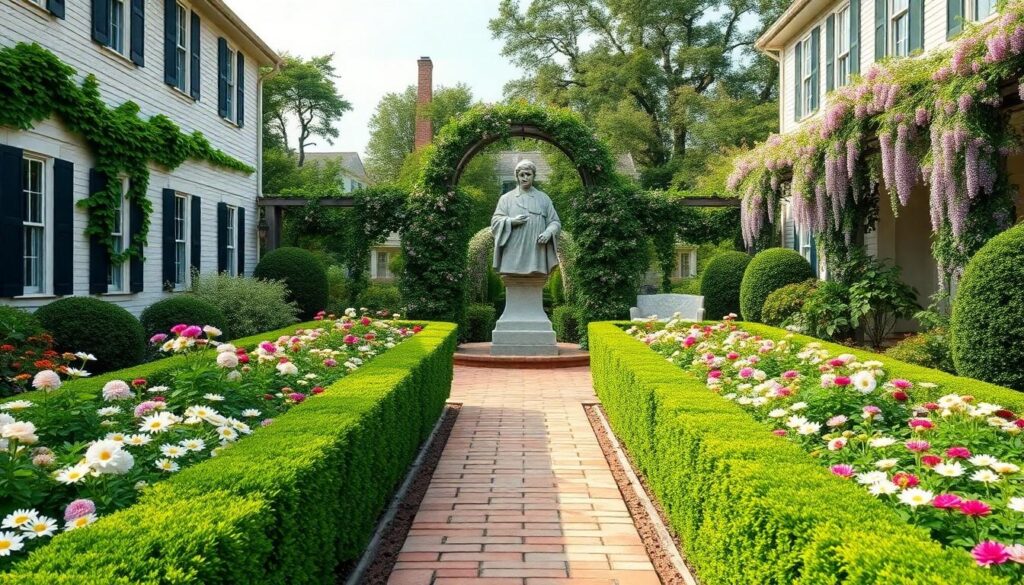
Colonial landscaping emphasizes historical aesthetics and harmony. Key elements contribute to creating an inviting and elegant outdoor space.
Symmetry And Balance
Symmetrical designs enhance the charm of colonial gardens. Equal arrangements create visual appeal, often featuring central pathways flanked by plantings. Front yards typically include a prominent focal point, such as a well-placed tree or a classic statue. Both sides of the path maintain similar plant heights and colors, promoting unity. Balance ensures that gardens feel harmonious, guiding the eye through the landscape. Designers often integrate boxwood hedges for clean, defined borders, further supporting the classical approach. A symmetry-focused layout leads to a sophisticated and timeless look that celebrates colonial heritage.
Plant Selection
Plant selection plays a crucial role in colonial landscaping. Perennials such as daisies and peonies add vibrant colors throughout the seasons. Choosing climbing vines like wisteria and clematis introduces vertical elements, enhancing the overall design. Traditional flowering shrubs, such as hydrangeas and lilacs, add depth and fragrance. Incorporating seasonal changes showcases variety, ensuring that each phase of the year brings fresh beauty. Native plants are beneficial, attracting wildlife while requiring less maintenance. Selecting a diverse range of plants creates a lush, layered appearance that complements the historical theme of the landscape.
Design Ideas For Colonial Homes
Colonial house landscaping thrives on the elegance and symmetry of historical aesthetics. Thoughtful designs elevate the home’s charm while creating inviting outdoor spaces.
Front Yard Landscaping
Front yards benefit from symmetry, often featuring neatly trimmed boxwood hedges framing pathways. Colorful perennial flower beds draw the eye toward the entrance, while decorative lanterns add classic appeal. Seasonal planting provides year-round interest, blending tulips in spring with chrysanthemums in fall. Garden benches offer a place for visitors to enjoy the scenery. Curved pathways made from brick or gravel lead the way, emphasizing the home’s architectural features. Traditional wrought iron fencing complements the historical feel while maintaining boundaries.
Backyard Retreats
Backyards transform into serene retreats with strategic landscaping that promotes relaxation. Lush flowering shrubs and climbing vines create privacy and enhance the intimate atmosphere. Cozy seating areas nestled among fragrant plants encourage outdoor gatherings. A brick patio serves as a central element, perfect for entertaining or quiet evenings. Adding a classic gazebo or arbor provides shade while enhancing architectural charm. Water elements like small fountains bring tranquility, attracting birds and enriching the natural experience. Well-placed lighting illuminates pathways, ensuring safety and inviting lingering after sunset.
Maintenance Tips For Colonial Landscapes
Maintaining a colonial landscape requires attention and care to preserve its historical charm. Seasonal care and sustainable practices play significant roles in achieving this.
Seasonal Care
Spring brings a burst of activity for colonial landscapes. Homeowners should prioritize pruning shrubs and deadheading perennials to promote healthy growth. Fertilizing plants early in the season supports vibrant blooms. In summer, regular watering becomes crucial, particularly during dry spells. Mulching not only retains moisture but also controls weeds, ensuring garden aesthetics. Autumn necessitates raking leaves and preparing beds for winter dormancy. Planting bulbs in the fall allows for stunning spring displays. Winter tasks include protecting sensitive plants from frost and maintaining pathways for easy access.
Sustainable Practices
Emphasizing sustainable practices enhances both beauty and health in colonial landscapes. Selecting native plants typically requires less maintenance and supports local ecosystems. Incorporating rain gardens can effectively manage excess water and reduce runoff. Composting yard waste provides natural nutrients to the garden. Utilizing organic fertilizers maintains soil health while minimizing chemical use. Pollinator-friendly plants attract beneficial insects and promote biodiversity. Implementing xeriscaping, where appropriate, conserves water by utilizing drought-resistant plants. These practices ensure that colonial landscapes remain vibrant and healthy for future generations.
Colonial house landscaping offers a unique opportunity to blend historical charm with modern aesthetics. By embracing the elegance of symmetry and thoughtful plant selection, homeowners can create inviting outdoor spaces that reflect the beauty of the past. Seasonal changes and well-maintained hardscape elements further enhance the allure, making these landscapes not just beautiful but also functional.
With proper maintenance and sustainable practices, these gardens can thrive for generations. The attention to detail in design and care ensures that each colonial landscape remains a testament to its rich heritage while providing a serene retreat for those who cherish its beauty. Investing in colonial landscaping is more than just enhancing curb appeal; it’s about preserving history and creating a lasting legacy.